
In February, we met one of our native bees, the hardworking mining bees—quiet architects of the underground, carefully digging tunnels and provisioning their nests with pollen for the next generation.
But not all bees build their own homes.
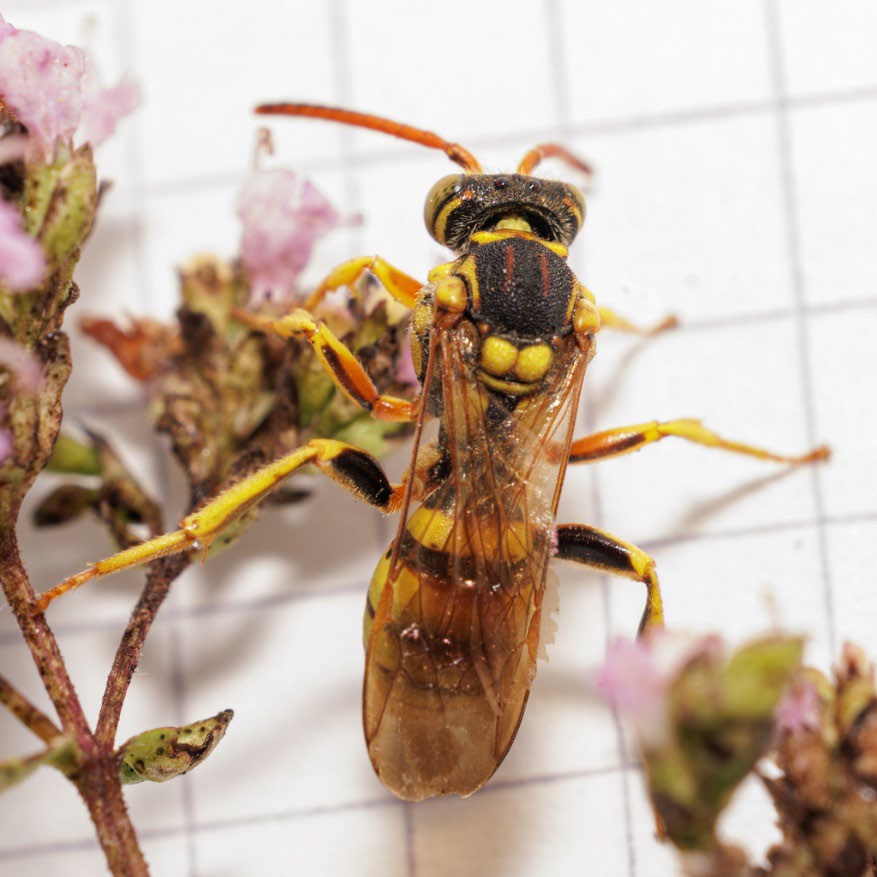
This month, I’d like to introduce you to a different kind of native bee—one that has taken another path entirely. Meet the cuckoo bees of the genus Nomada.
Cuckoo bees do not collect pollen. They do not dig nests. Instead, they rely on the work of other bees—most often mining bees—to raise their young.
Much like the cuckoo bird, for which they are named, these bees lay their eggs in the nests of other species. When the cuckoo bee larva hatches, it consumes the pollen provisions that were carefully gathered by its host.
At first glance, this may sound harsh. But in nature, this relationship is part of a larger balance. Cuckoo bees are not invaders or pests—they are native species that have evolved alongside their native hosts, each playing a role in a complex ecological system.
If you joined me in February as we explored mining bees (Andrena), you may begin to see the connection to their kleptoparasitic counterparts—cuckoo bees that rely on the provisions of other bees. Those small volcano-like mounds of soil, the steady movement of bees entering and exiting their tunnels—these are not only signs of a healthy nesting site but also places where cuckoo bees may be quietly at work.
Cuckoo bees are closely tied to their hosts. Each species of Nomada has evolved to target specific ground-nesting native bees, often emerging at just the right time to coincide with the nesting activity of mining bees. While the mining bee is busy provisioning her nest—making repeated trips to gather pollen and nectar—the cuckoo bee waits for an opportunity to slip inside and lay her egg.
This interaction happens almost entirely out of sight, beneath the soil. What we see above ground are only subtle clues.
What might you look for during a visit to the Refuge?
Watch for bees that seem different.
While mining bees move with purpose between flowers and their nests, often dusted with pollen, cuckoo bees appear more restless. They fly low over the ground, zigzagging and pausing, as if searching. Their bodies are smoother, often brightly marked in yellow, red, or orange, and they lack the fuzzy pollen-collecting hairs of other bees.
You may notice them hovering near nesting areas, investigating small holes in the soil, or darting quickly from one spot to another.
If you’re lucky, you might be witnessing a quiet and remarkable moment—one bee’s life intricately linked to another’s.
As we walk the trails and gardens of the Refuge, it is easy to notice the blooms, the birds, and the more familiar pollinators moving from flower to flower. Yet just beneath our feet, another story is unfolding—one of timing, strategy, and quiet interdependence.
The presence of cuckoo bees reminds us that a healthy landscape is not defined by a single species, but by the relationships between them. What may seem, at first glance, like an act of taking is, in fact, part of a long-evolved balance—one that depends on the success of both host and guest.
So, the next time you see a small bee moving purposefully across the ground, or hovering near a patch of bare soil, take a moment to pause and observe. There is more happening than meets the eye.
In a landscape that listens, even the unseen has a role to play.
-Anne Bulger, Friends of Ridgefield NWR Board Member, & OSU Master Melittology Lead Instructor for the RNWR
Stay updated on Refuge events, news, and wildlife sightings!


Shop for items that the Friends and the Refuge Complex need to help with everything from habitat restoration to events like BirdFest & Bluegrass, and help support wildlife in little and big ways.
Learn More »
Sign up for the Community Rewards program by linking your Fred Meyer Rewards Card to Friends of Ridgefield National Wildlife Refuge (PK822). For more information, please visit the link below.
Learn More »