I hear that comment a lot when I talk about bees. My response is usually, “By what?”
Most people are surprised to learn that if they’ve been stung, the culprit was probably not one of our native bees.
Washington is home to more than 600 species of native bees, and most of them are remarkably polite neighbors. They aren’t interested in defending a hive, guarding honey, or chasing people away from picnic tables. They’re busy doing bee things—collecting pollen, visiting flowers, and making sure the next generation has enough food.
In fact, after collecting and observing thousands of native bees, I can count on one hand the number that showed any interest in me. Flowers, on the other hand, have their full attention.
Honey bees are a different story.
Honey bees live in large colonies filled with sisters, developing young, and valuable honey stores. If a honey bee believes her colony is threatened, she may sting to defend it. Unfortunately for her, that’s a one-time event. Honey bees have a barbed stinger that gets stuck in the skin. When the bee pulls away, the stinger remains behind, and the bee soon dies.
It’s the insect equivalent of a heroic last stand.
Yellowjackets and other social wasps, however, didn’t get that memo.
Unlike honey bees, wasps have smooth stingers. They can sting, fly away, reconsider their decision, and sting again. And again. To make matters worse, some species release alarm pheromones that signal nearby nestmates that there may be trouble. That’s why accidentally disturbing a yellowjacket nest can quickly become an experience you’ll never forget—and probably don’t want to repeat since you may get stung repeatedly.
Before we become too hard on wasps, it’s worth noting that they play important roles in our ecosystems. Many wasps are valuable pollinators, visiting flowers for nectar and inadvertently moving pollen from bloom to bloom. They are also important predators, helping control caterpillars, flies, and other insects that might otherwise become pests.
Like native bees, most wasps are simply going about their daily business. It’s only when their nests are disturbed that they become defensive.
Native bees generally don’t share that lifestyle or attitude.
Most native bees are solitary. Every female is essentially a single mom building her own nest. There’s no large colony to defend and no army of sisters waiting for instructions. If a native bee encounters a human, her preferred strategy is almost always simple: fly away.
What should you do if you are stung?
If a honey bee leaves a stinger behind, remove it as quickly as possible by scraping it away with a fingernail, credit card, or similar object. The important thing is to remove it quickly. Then wash the area with soap and water and apply a cold compress to reduce swelling and discomfort.
If you’re stung by a wasp, there won’t be a stinger left behind. Move away from the area promptly since additional wasps may be nearby, then wash the sting site and apply a cold compress.
For most people, a sting is painful but temporary. However, seek immediate medical attention if you experience difficulty breathing, swelling of the face or throat, widespread hives, dizziness, or other signs of a severe allergic reaction. That’s an emergency!
Fortunately, most bee and wasp stings are not emergencies. They may be uncomfortable, and they may earn a few colorful words, but for most people the pain, redness, and swelling are temporary and resolve with simple first aid and a little patience.
The next time you see a native bee visiting flowers at Ridgefield National Wildlife Refuge, remember that she’s not sizing you up as a target. She’s focused on pollen, nectar, and the important business of pollination.
Truth be told, she’s probably far more interested in the flower than she is in you. She’s on a mission, and you’re just standing between her and the buffet. Unless you’ve suddenly transformed into a blooming Snowberry shrub or a patch of Oregon Sunshine, she’s unlikely to give you a second thought.
So, the next time someone says, “I’ve been stung by a bee before,” you might gently ask, “Are you sure it was a bee?”
Our native bees would appreciate the clarification!
-Anne Bulger, Friends of Ridgefield NWR Board Member, & OSU Master Melittology Lead Instructor for the RNWR Complex
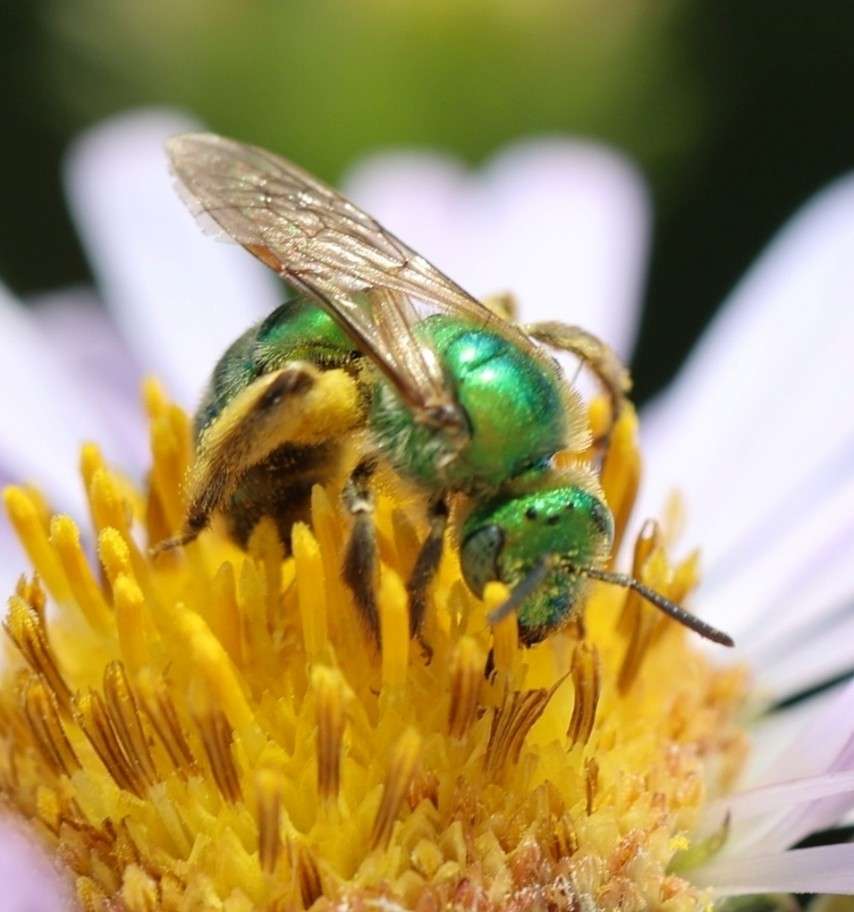
There should be an image of a Native Fine Striped Sweat Bee by la4bonte/iNaturalist,
but our website is having technical difficulties. One will be posted soon, or return to the newsletter to view the image.
Stay updated on Refuge events, news, and wildlife sightings!
Shop for items that the Friends and the Refuge Complex need to help with everything from habitat restoration to events like BirdFest & Bluegrass, and help support wildlife in little and big ways.
Learn More »
Sign up for the Community Rewards program by linking your Fred Meyer Rewards Card to Friends of Ridgefield National Wildlife Refuge (PK822). For more information, please visit the link below.
Learn More »